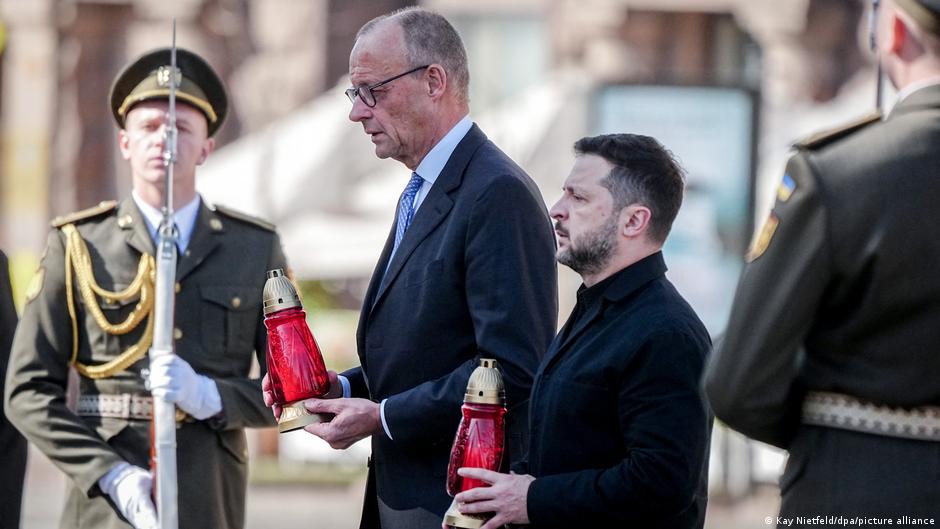
The attack and the visit coincided, highlighting the security risks surrounding diplomatic meetings in the Ukrainian capital. The three outlets reported that the bridge was hit shortly after Merz arrived in Kyiv.
The Guardian identified the viaduct as the Northern Bridge, the northern bridge over the Dnipro River. This identification was reported only by the British outlet among the sources provided.
According to The Guardian, Merz’s visit had not been announced and was intended to demonstrate Germany’s support for Ukraine. The chancellor’s trip was therefore presented as a political signal of support for Kyiv amid the war.
Deutsche Welle reported that Merz was expected to announce further measures to support Ukraine, including initiatives for drone production. However, the available information does not confirm that these measures were formally announced during the visit.
The Guardian reported that two people were injured in the attack, citing Kyiv Mayor Vitali Klitschko. The casualty figure therefore comes from this single source and is attributed to the capital’s mayor.
Al Jazeera also reported that the visit took place as air-raid sirens sounded in Kyiv. The detail underscores the operational context in which the German chancellor was moving, but it was reported only by the Qatari outlet among the available sources.
According to The Guardian, the attack on the bridge would have been the fourth consecutive day of Russian attacks on Kyiv’s bridges. This chronological account is likewise supported exclusively by the British source in the material examined.
The coincidence between Merz’s mission and the strike on the bridge thus brought German diplomatic support for Ukraine and the continuation of attacks on the capital together in the same episode. The attribution of the attack to Russia is the one reported by the sources that described the incident.