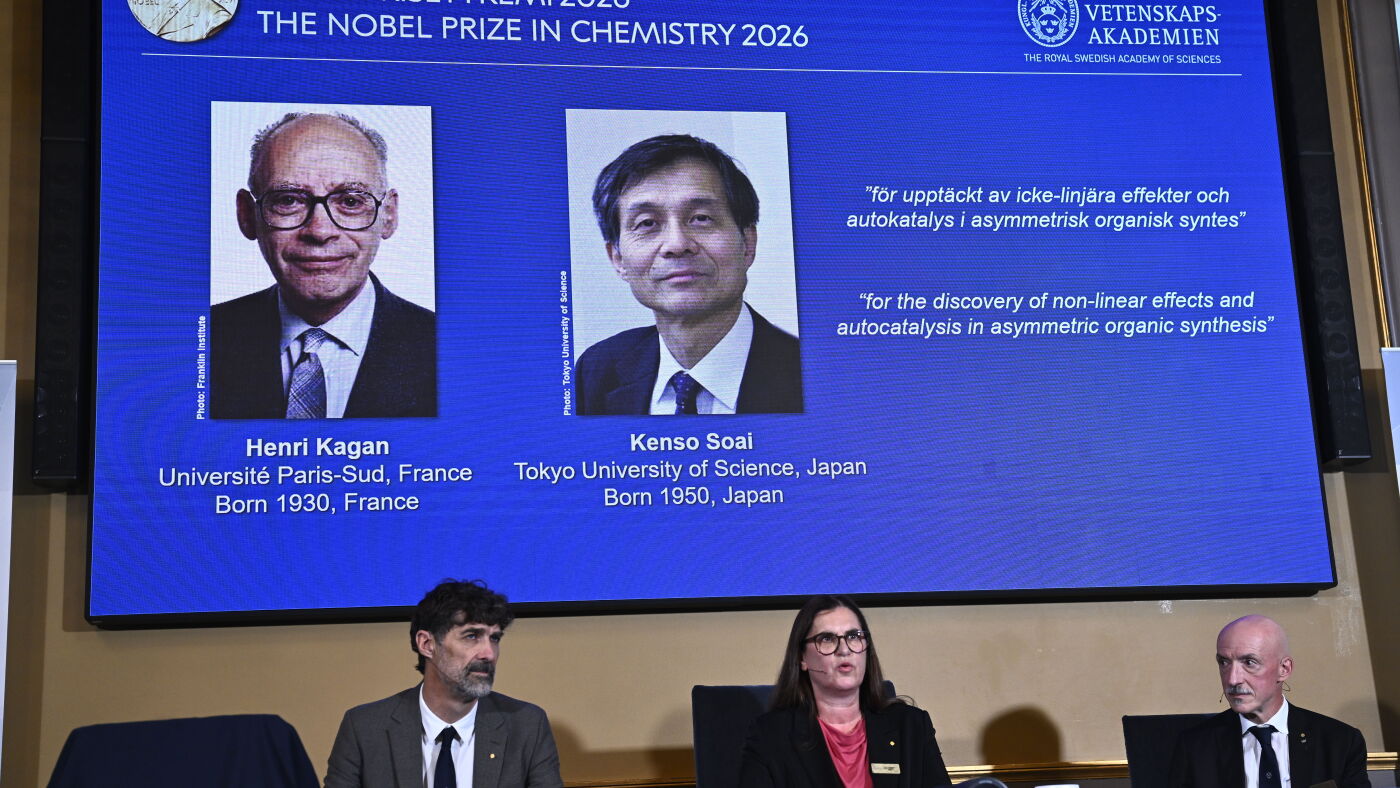
The prize was awarded to Kagan, who is French, and Soai, who is Japanese, in what sources describe as a recognition of a French-Japanese pair.
The Nobel citation concerns the discovery of nonlinear effects and autocatalysis in asymmetric organic synthesis.
The award-winning work also addresses the question of why, in nature, only one of the two forms of certain molecules is found. This phenomenon is associated with so-called homochirality.
The reference to asymmetric organic synthesis and nonlinear effects constitutes the scientific core of the award citation reported by NPR and The Japan Times.
RFI described the research as a contribution to clarifying the presence in nature of only one of the two forms of certain molecules, while Clarín linked the issue of reactions leading to homochirality to the development of drugs.
According to Clarín, the announcement of the winners was made by the Royal Swedish Academy of Sciences. The available information does not specify the location or time of the announcement.
With Kagan and Soai, the 2026 Nobel Prize in Chemistry thus recognizes research focused on nonlinear effects, autocatalysis and processes related to asymmetric organic synthesis, without the sources provided describing any further applications or specific results.